
The curriculum is delivered entirely online through Penn State World Campus and integrates courses in art and design, information sciences and technology, communications, and general education options. When embedded in problem-based, purpose-driven inquiry the curriculum is dynamic and responsive to individual needs, interests and aspirations. This approach is well suited and expertly supported in the resource rich online environment. Students take a series of prescribed courses in digital multimedia design, supporting courses in related areas, and additional courses drawn from online tracks in visual arts and design, information sciences and technologies, and communications. The content is sequenced in order to be informing and transforming as students move through the degree.

Lead Faculty
DMD Curriculum Coordinator
Instructor
School of Visual Arts, College of Arts and Architecture
msc227@psu.edu
Michael Collins joined the Penn State School of Visual Arts in 2012 where he teaches 3D animation, digital design, and digital fabrication. His research interests in open-source technology and sustainable design unite around online education, where he works to identify and solve contemporary issues facing online teaching and learning. Long-term project collaborations include the ELMS Learning Network project and the OERSchema project. Collins has previously worked on projects for the NFL, BMW Guggenheim Lab in NYC, and as freelance product designer. He has attended, presented at, and helped organize a variety of international design, technology, and education conferences and has been a long-time SIGGRAPH volunteer.

Instructor
Online Programs Coordinator
College of Arts and Architecture
axd289@psu.edu
Anna Divinsky is an instructor of art and the lead faculty of the Digital Arts Certificate Program offered by the School of Visual Arts and Penn State World Campus. In addition to teaching online, she oversees online training of new instructors and graduate assistants teaching in the program. Her goal is to foster close communication between the students and faculty. Being an artist inspires and informs her approach to how she authors and teaches online, integrating studio techniques and hands-on art making. She works primarily with fiber, creating paintings on silk, sculptural forms, and site-specific installations. Her love for pattern, design, intricate detail, and repetition is reflected in her course’s requirements.
Lead Faculty
Instructor
College of Communications
why1@psu.edu
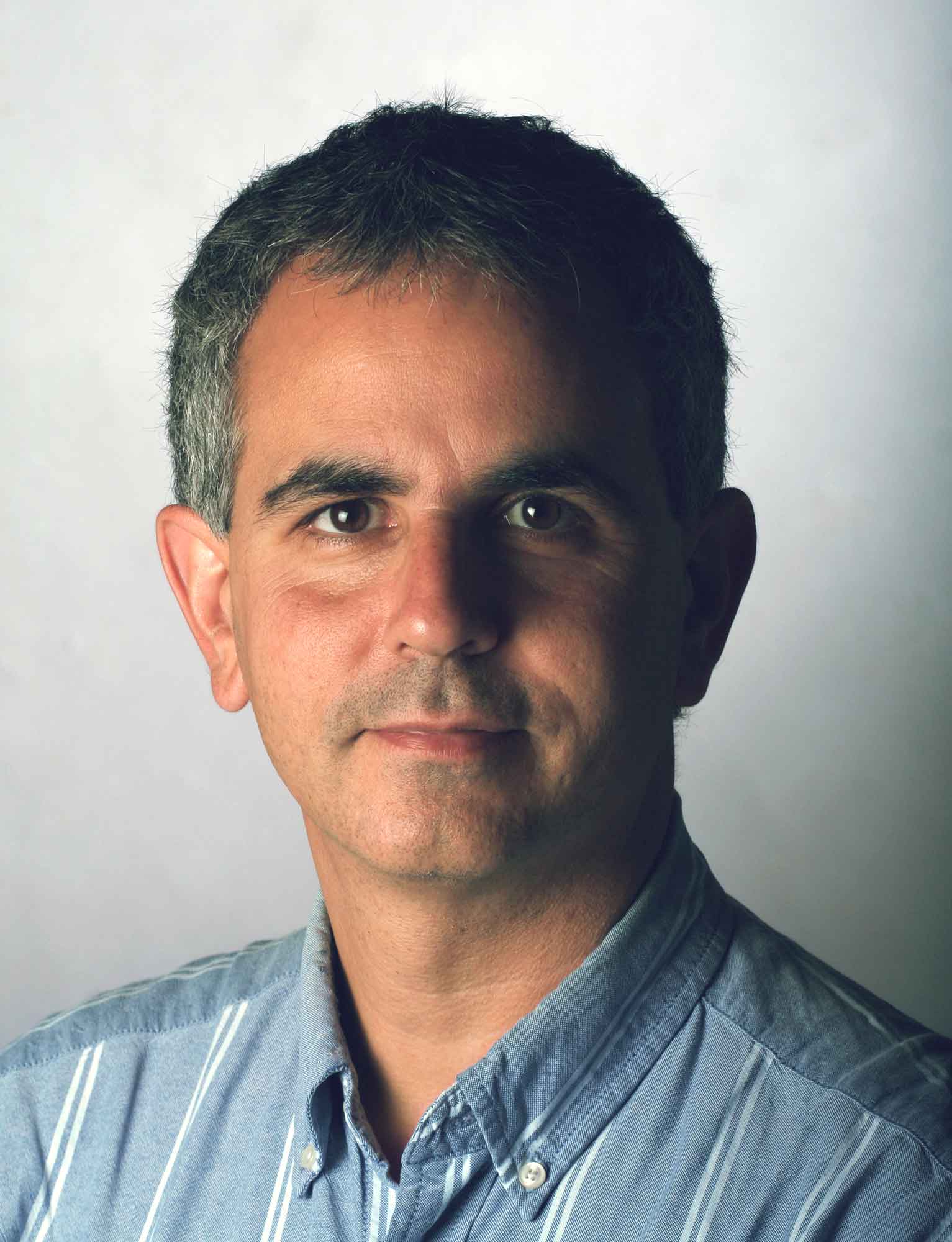
Will Yurman is a senior lecturer in the College of Communications at Penn State where he teaches multimedia storytelling and photojournalism. He lives in State College, Pennsylvania with his wife Hilary Appelman their two children, two cats and a dog. Before coming to Penn State he worked in journalism for more than 20 years as a still photographer and multimedia producer. Will was a staff photographer at the (Rochester N.Y.) Democrat and Chronicle. He also spent three years based in Jerusalem covering the Palestinian-Israeli conflict. His still photography and multimedia work have been recognized in the Best of Photography, and Picture of the Year International contests and exhibited at The George Eastman House International Museum of Photography and Film. His obsessive-compulsive nature has allowed him to extend his photo a day project to more than twelve years. Not to jinx it, but he has taken a photo every day since December 31, 2003.
Lead Faculty
Instructor
College of Information Sciences and Technology
gto1@psu.edu
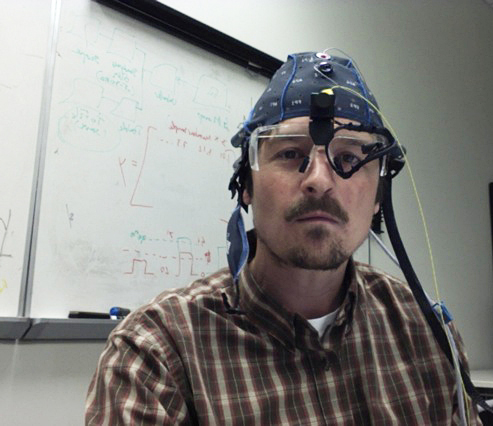
Dr. Greg O’Toole, Ph.D. is a Senior Lecturer in the College of Information Sciences and Technology at Penn State University where he focuses on effective creative expression using open source technologies and critical approaches to media studies. Greg has been working on the web since 1994, effectively building sustainable web ecosystems for a globally diverse range of users and clients.
Dr. O’Toole studied at Bradley University (B.S.); The School of the Art Institute of Chicago (Post-Bacc.); University of Denver (M.A.); and the European Graduate School in Saas-fee, Switzerland for his doctoral research, and defended his doctoral dissertation on extracting meaning from mediated messages with Professor Dr. Hubertus von Amelunxen, Ph.D. in Berlin, Germany which was published the same year.
As an author, lecturer, designer, developer and consultant, Dr. O’Toole has worked with many great organizations around the world such as McGill University in Quebec, Canada; Ochanomizu University in Tokyo, Japan; Yale University Press; Kotka Photographic Center in Kotka, Finland; Rhonda Schaller Gallery in New York City; Chicago Public Library; University of California at Berkeley; Drupalcon in Dublin, Ireland; University of Chicago; Frontline on PBS; Cellbytes in Australia; Temple University; Philadelphia Cultural Alliance; Brazilian Scientific Mobility Program at the Federal University of Paraná, Brazil; Instituto de Educação Superior in Brazil; Harvard University; National Science Foundation, National Institutes of Health, National Endowment for the Arts; Montana Arts Council; Los Angeles Center for Digital Art; University of Applied Sciences Hof, Bavaria, Germany; The British Journal of Educational Technology; Acquia; IEEE Computer Society; Springer Briefs in Computer Science; Enterprise Learning Solutions/NIIT in India; and The National Library of Poetry.
The web projects he’s helped build over the years are currently in use by 10 million+ web users globally each month.

Instructor
College of Arts and Architecture
bea9@psu.edu
Benjamin Andrew is an interdisciplinary artist exploring the frontiers of storytelling and technology. He has taught university classes and workshops at the Maryland Institute College of Art, Johns Hopkins University, and Penn State. At Penn State, he is involved with several interdisciplinary teaching initiatives, such as the new Digital Multimedia Design online degree program and a collaborative course on scientific illustration and history in the Department of Biology in the Eberly College of Science.

Instructor
School of Visual Arts, College of Arts and Architecture
ean13@psu.edu
Eduardo Navas is the author of Remix Theory: The Aesthetics of Sampling ( Springer, 2012), Spate: A Navigational Theory of Networks (INC, 2016), as well as Art Media Design and Postproduction: Open Guidelines on Appropriation and Remix (forthcoming: Focal/Routledge, 2018). He is co-editor of The Routledge Companion to Remix Studies (Routledge, 2015), and Keywords in Remix Studies (Routledge 2017). He implements methodologies of cultural analytics and digital humanities to research the crossover of art and media in culture. His production includes art & media projects, critical texts, and curatorial projects. He has presented and lectured about his work and research internationally.
Navas collaborates with artists and institutions in various countries to organize events and develop new forms of publication and creative production. He has been a juror for Turbulence.org (Boston) in 2004, Rhizome.org (NYC) in 2006-07, and Terminal Awards in 2011. Navas was consultant for Creative Capital (NYC), 2008-09, and for The Herb Alpert Award in the Arts (LA), 2014-2015. He was founder and contributing editor of Net Art Review (2003-05), and was co-founder of newmediaFIX (2005 to 2011). Navas was Gallery Coordinator, Researcher and Senior Writer for gallery@calit2, UC San Diego in 2008. He has lectured on art & media theory, art history as well as studio practice at various colleges and universities in the United States, including Otis College of Art & Design, San Diego State University, the program of Culture and Media at Eugene Lang College as well as the MA Media Studies Program at The New School for Public Engagement, NY.
Navas currently researches and teaches principles of cultural analytics and digital humanities in The School of Visual Arts at The Pennsylvania State University, PA. He is Research Faculty in the College of Arts and Architecture’s Art & Design Research Incubator (ADRI), and a 2016-17 Center for Humanities and Information Research Fellow (CHI) at Penn State. He was a 2010-12 Post Doctoral Fellow in the Department of Information Science and Media Studies at the University of Bergen, Norway. He is an affiliated researcher at the Software Studies Lab, Cuny (2010-present). He received his Ph.D. from the Program of Art History, Theory, and Criticism at the University of California in San Diego.

Instructor
School of Visual Arts, College of Arts and Architecture
jld477@psu.edu
Jamie DiSarno is a Doctoral Candidate at the University of Buffalo in Visual Studies. She received a Bachelors of Fine Arts in painting and sculpture from the State University of New York at Fredonia and a Masters of Fine Arts in New Media from the Pennsylvania State University. She has published articles in Wanderlust: A History of Walking, edited by Rachel Adams, by the MIT Press, in 2018 and in Ill at Ease, edited by Conor Moynihan, University at Buffalo, in 2017. She co-curated the exhibition Wright’s Larkin: Arts and Crafts in Industry at the University of Buffalo. She has presented her research at the College Art Association Conference and the Latin American Studies Association among other symposium. Her research pertains to art in Latin America, and contemporary artistic practice including performance and feminist art, art and activism.

Instructor
School of Visual Arts, College of Arts and Architecture
kib5194@psu.edu
Ian Brill instructs digital media arts at Penn State. In addition to teaching, his professional experiences lie in the fields of design, sound design, interactive design, digital fabrication, programming, performance, film scoring, illustration, and sculpture. His works have existed in museums, galleries, public art settings, music festivals, performance spaces, online, and film. In both his teaching and his studio practice, he purposely applies design principles and philosophy, across different mediums and technologies, to foster, reinforce, and express a greater fluidity of comprehension.
Instructor
School of Visual Arts, College of Arts and Architecture
lmr22@psu.edu
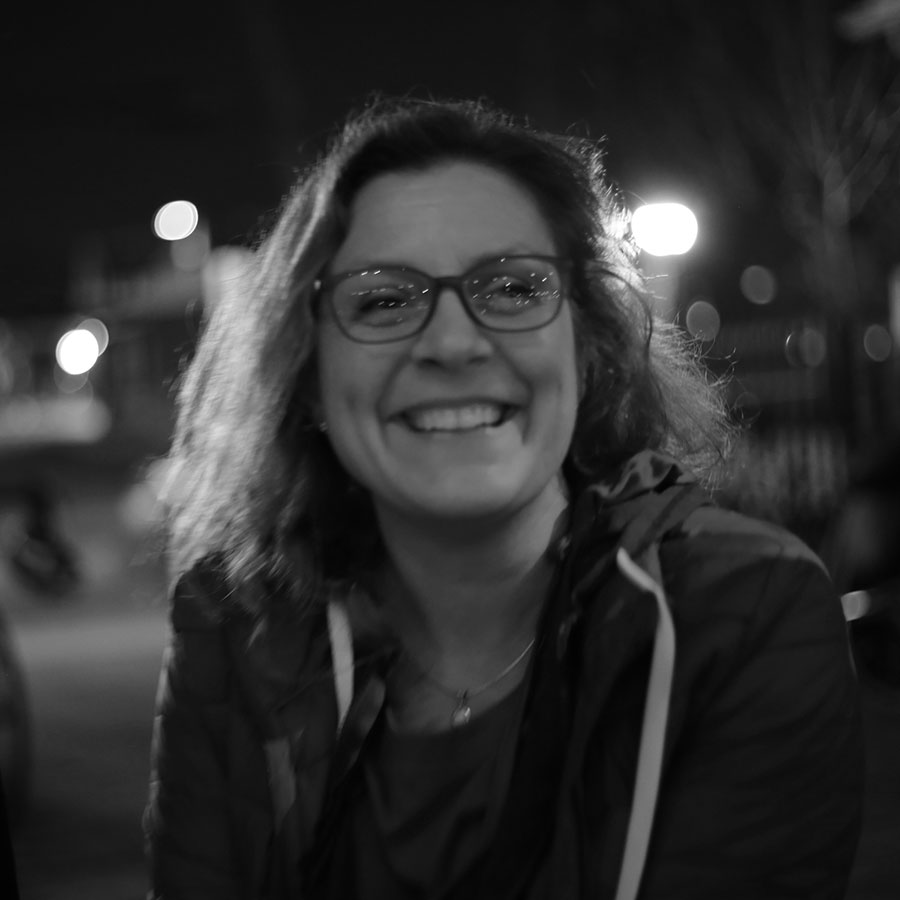
Leanna Rosas’ teaching and new media studio work is concerned with issues of identity, inequality, irony and manipulation, and the various relationships within visual culture. Her most recent work is in music composition, collaborating with the visual work of partner Carlos Rosas, Penn State School of Visual Art, and the audio remixing of Robert Dansby, California Institute of the Arts. Much of the work resulting from their collaborations seeks to explore means in which one identifies with the continually evolving conditions within a technology-driven culture.